The margin is discovered in the accounts
The profitability of an August trip is known in November, when nobody can act on the rate or on the lane any more.
The profitability of a mission does not fit in one number. There is what the documents prove — the invoiced price minus the supplier invoices pointing at that file — and there is what an assumption produces once overheads are allocated. Confusing the two means taking an opinion for a fact; separating them is what lets you decide.
The profitability of an August trip is known in November, when nobody can act on the rate or on the lane any more.
Large volume, large turnover, zero margin once the empty return and the tolls are counted. You find out by losing a profitable client in order to serve them.
Overheads allocated by turnover make every mission equally profitable — by construction, not by observation.
Invoiced turnover minus the supplier invoices attached to the mission: diesel, ferry, tolls, subcontracting. Every dirham is traceable to a document line, and one click opens the list of those documents.
The detail that matters. No cost of revenue is stored: the direct part is read by the same expression as the mission file. There are not two answers to “what did this trip cost”.
Rent, administrative salaries, fleet insurance, leasing: you cannot point them at a trip, only allocate them. The rule that was used is displayed next to the number it produced.
The detail that matters. Switch every rule off: the second figure moves, the first does not budge. That is the proof that fact and assumption are not mixed up.
Per kilometre for what is consumed by moving, per mission day for what is consumed by time, equally per trip for simplicity, by turnover — with the warning that this basis makes every mission equally profitable.
The detail that matters. Few programs write that their own button can lie. This one does, because a director who ignores the limit of a figure will make a decision with it.
The same double reading exists per client: the one bringing a lot of turnover and no margin is the most expensive client in your fleet. The period cuts missions, not documents.
The detail that matters. An August trip carries the ferry invoice that arrived on 4 September — otherwise August’s margin would depend on when a supplier chose to post their paper.
A mission with costs and no invoice yet is displayed as unbilled, in its own block. That is an invoice to issue, not a lane to condemn.
The detail that matters. Mixed currencies are shown as two sums with no total: adding dirhams to euros would produce a wrong figure that looks right.
Freight that overflows a trailer asks a question worth several thousand dirhams: one heavier trip, or two trips and one more handling operation? The advisor (a module at 400 MAD/month) puts both scenarios side by side — kilometres, extra handling, fixed cost per trip — checks that the freight fits in the largest trailer you have declared, and names the saving in dirhams.
The detail that matters. Every tariff carries its source: your own setting, a value derived from your last 90 days of closed trips — read by the same expression as the margin, there is no second definition of “what a trip costs” — or a named default. The computation is deterministic and runs without internet: advice you cannot audit is not advice.
The advisor’s second mode. You type the truck’s price or its lease payment, the insurance, the driver’s wage — the three numbers only you know. The real utilization rate, the revenue per machine and the cost per kilometre come from your own history, and the verdict lands in dirhams: monthly margin, break-even mileage, payback in months.
The detail that matters. The forecast runs at your ACTUAL utilization, never at a hundred percent; under sixty percent the product itself writes “fill the fleet before growing it” — against its own sale. Fewer than five invoiced trips over 90 days: no forecast at all. And the same screen compares “replace instead of buy”: one specific machine’s record — bound repairs and remaining amortization — against the candidate.
| Mission | Client | Turnover | Direct margin | After overheads |
|---|---|---|---|---|
| M-0705 | MERCADOMA | 31,200 | + 12,800 | + 6,900 |
| M-0704 | CITRUS SOUSS | 38,500 | + 12,400 | + 3,200 |
| M-0698 | MARJANE | 5,400 | + 450 | − 1,700 |
| M-0691 | LEONI MAROC | — | unbilled | unbilled |
Allocations are recomputed at read time. A stored share would drift away from the documents the moment a supplier invoice is added afterwards.
The selling price is their job; the cost structure is not. Access is a separate permission, enforced on screen and on the server alike.
Clicking a mission lists the client invoice and every supplier invoice aimed at it. A profitability figure you cannot open is worthless in a meeting.
The module reads client and supplier invoices: it takes on its full value once invoicing and purchases are entered in the product. The “one trip or two” advisor is a separate module, at 400 MAD/month, reading the same rates.
Direct costs are enough for the first margin — fuel, ferry, tolls, subcontracting. Overheads come later, and until they are there the product shows the direct margin alone instead of inventing a second one.
A supplier invoice line can point at a file: the diesel of that trip, the crossing, the subcontracted rotation. That attachment is what makes the margin traceable — and it is done when the invoice is entered, not at month end.
Yes. With no setting, the kilometre price is derived from your closed trips of the last 90 days, and the figure is labelled “derived from your last 90 days” together with the number of trips behind it. You see where the assumption comes from before deciding, and you replace it with your own rate the day you have one.
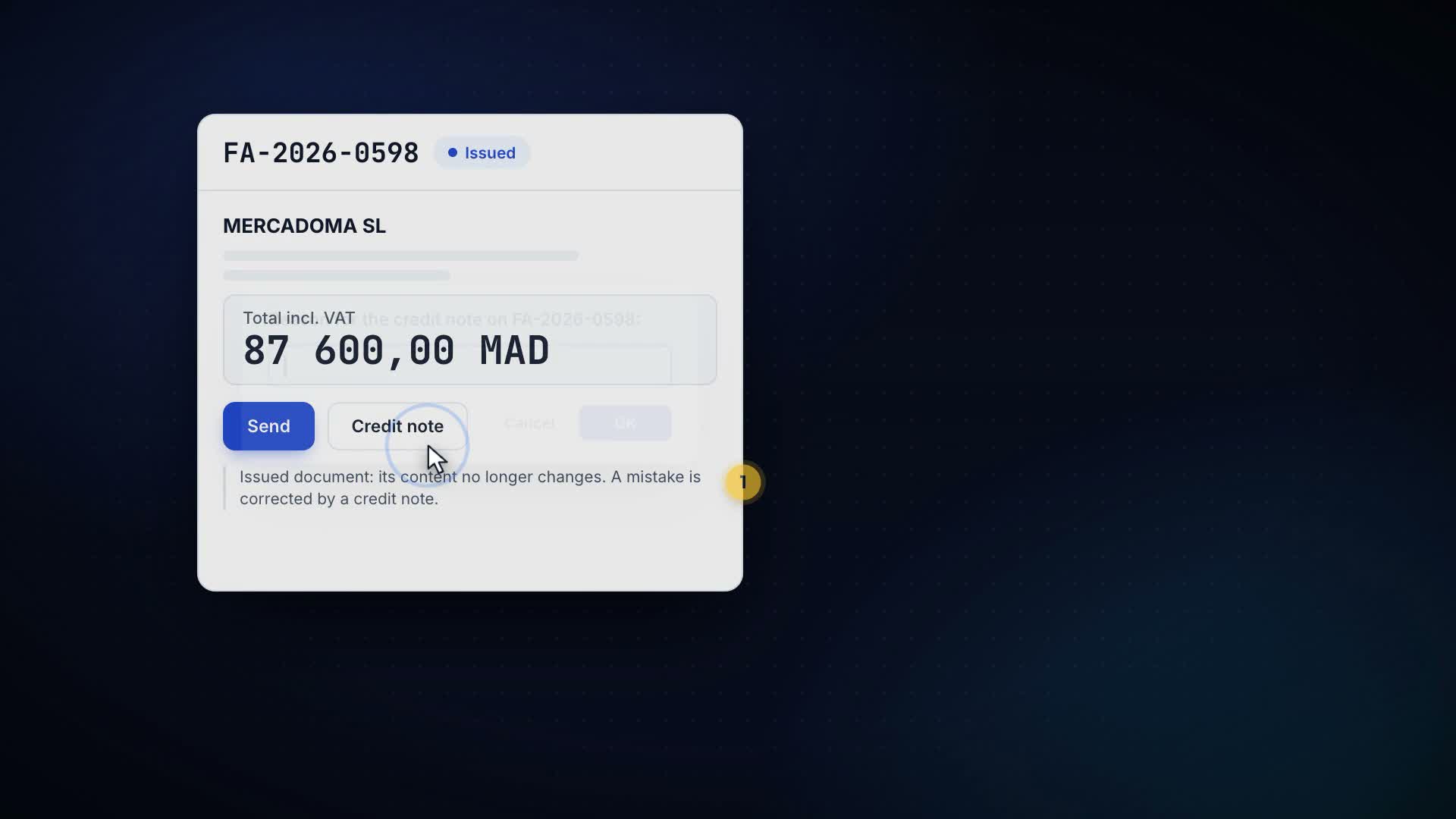 1:52Episode 23How do you go from a finished trip to an invoice with no gap in the numbering?
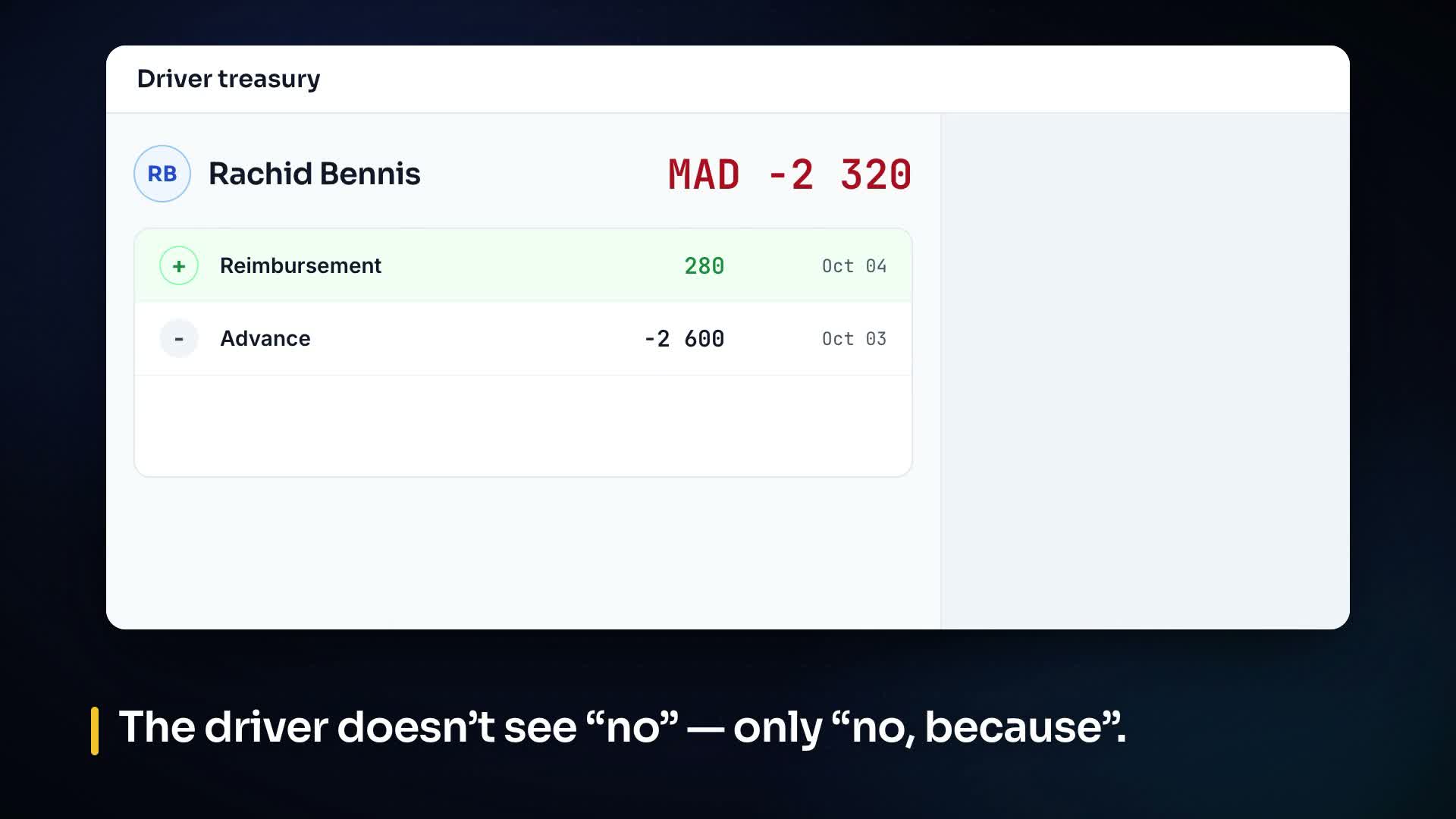 1:40Episode 24How do you keep driver advances and expense claims without a notebook?
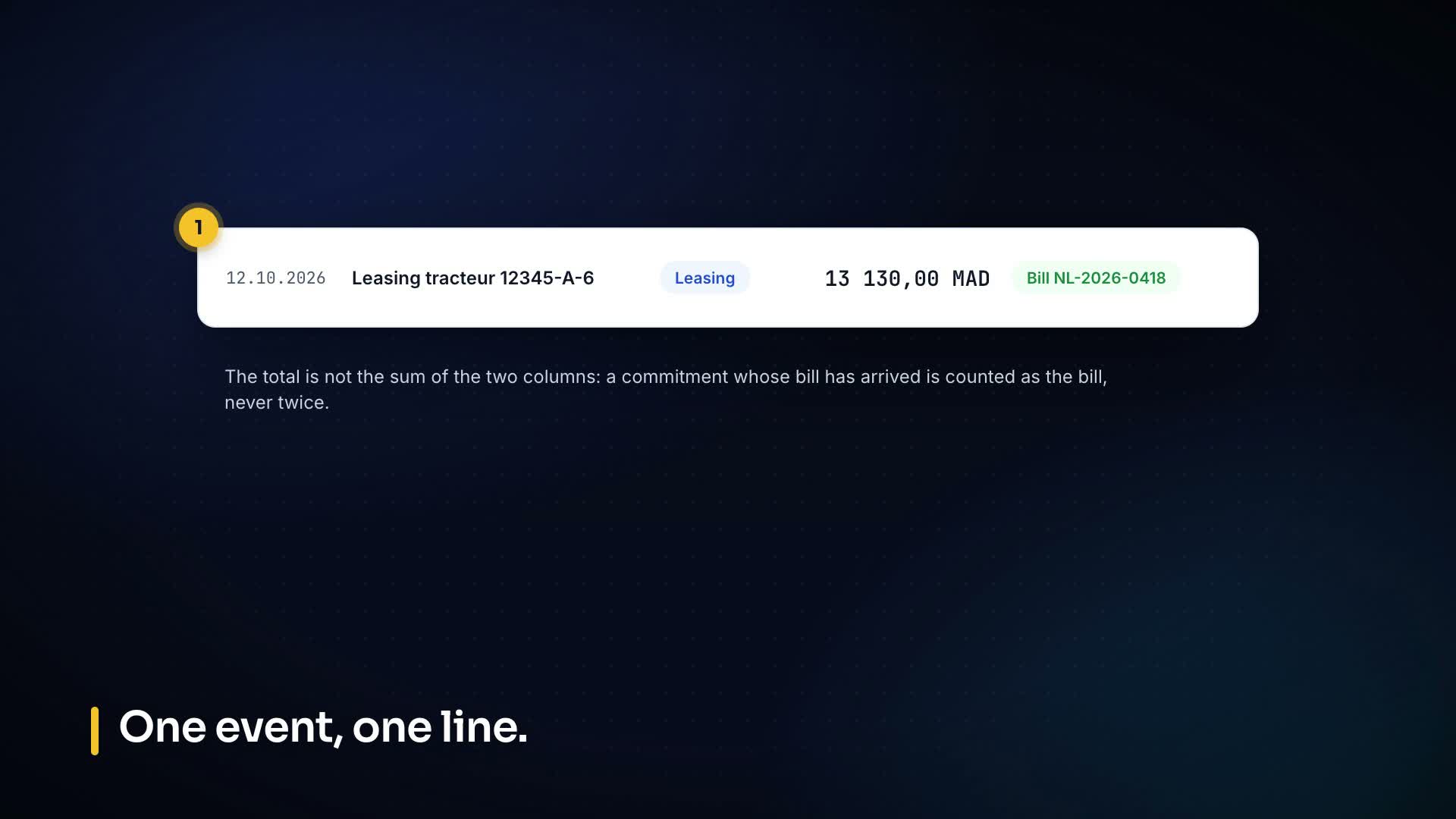 1:41Episode 25How much cash will you need to pay out over the next thirteen weeks, and when?
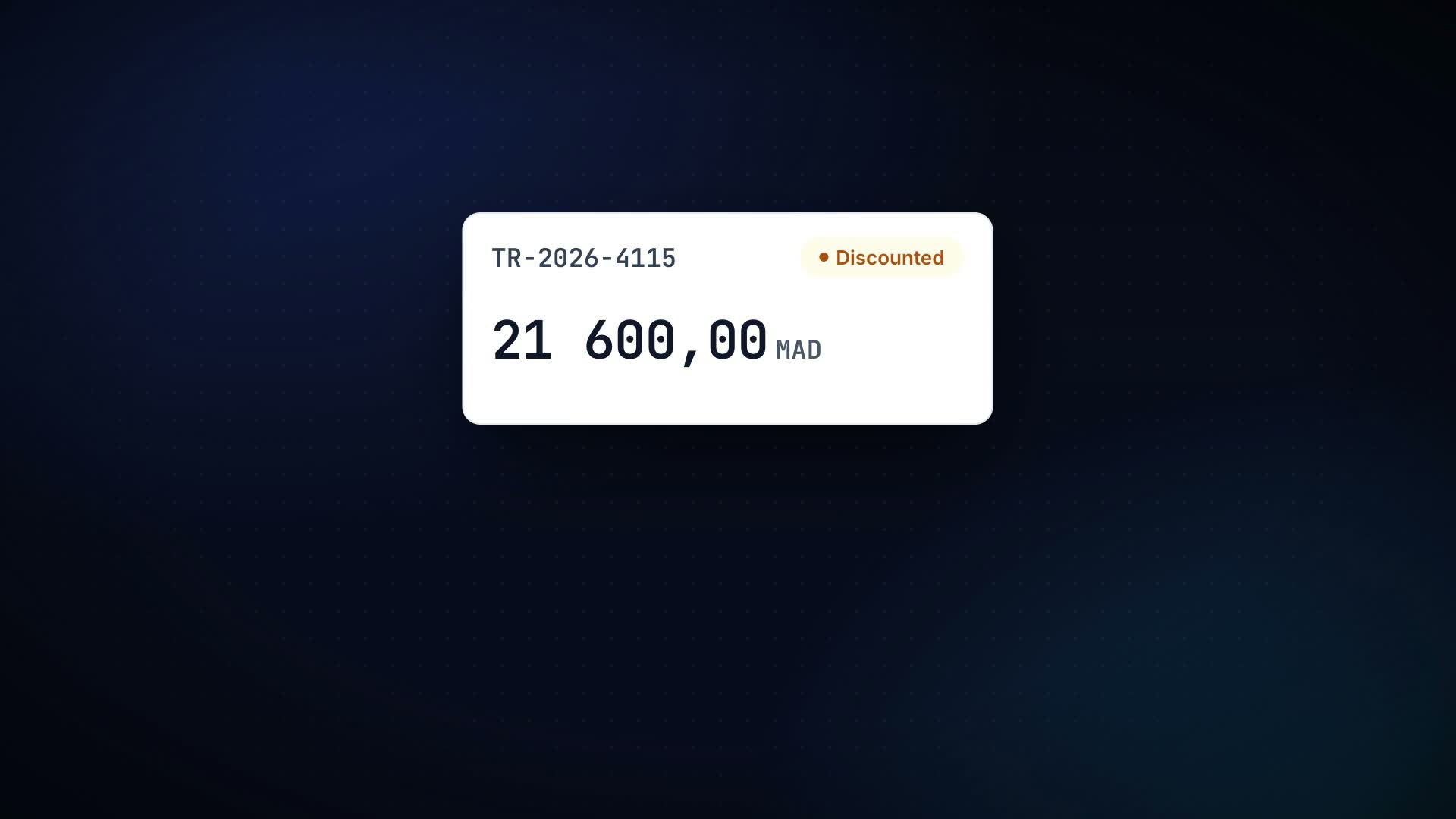 1:56Episode 26How many bills of exchange are sitting in your safe, and for how much?
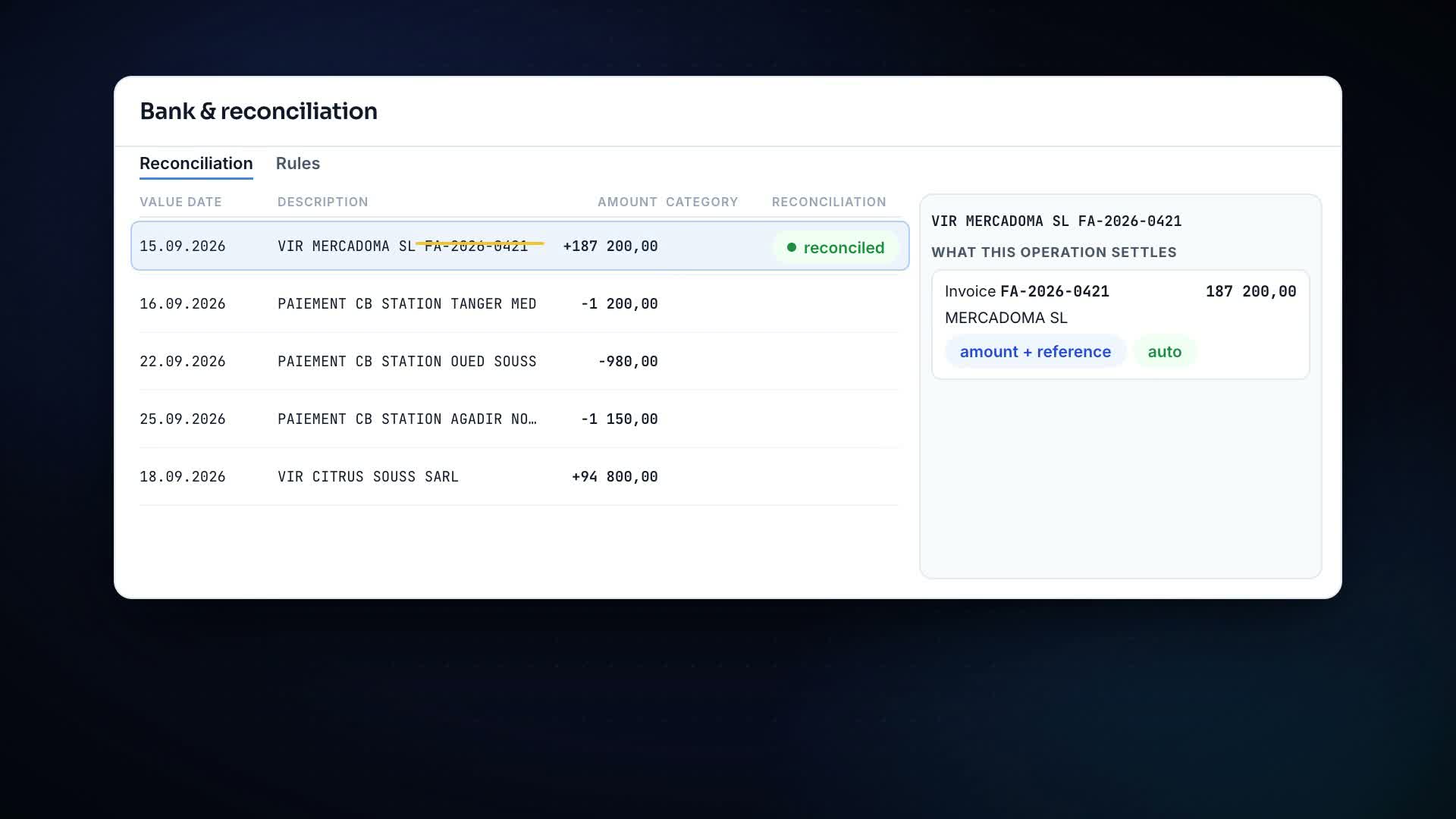 1:59Episode 27How do you reconcile the bank statement in minutes, not hours?
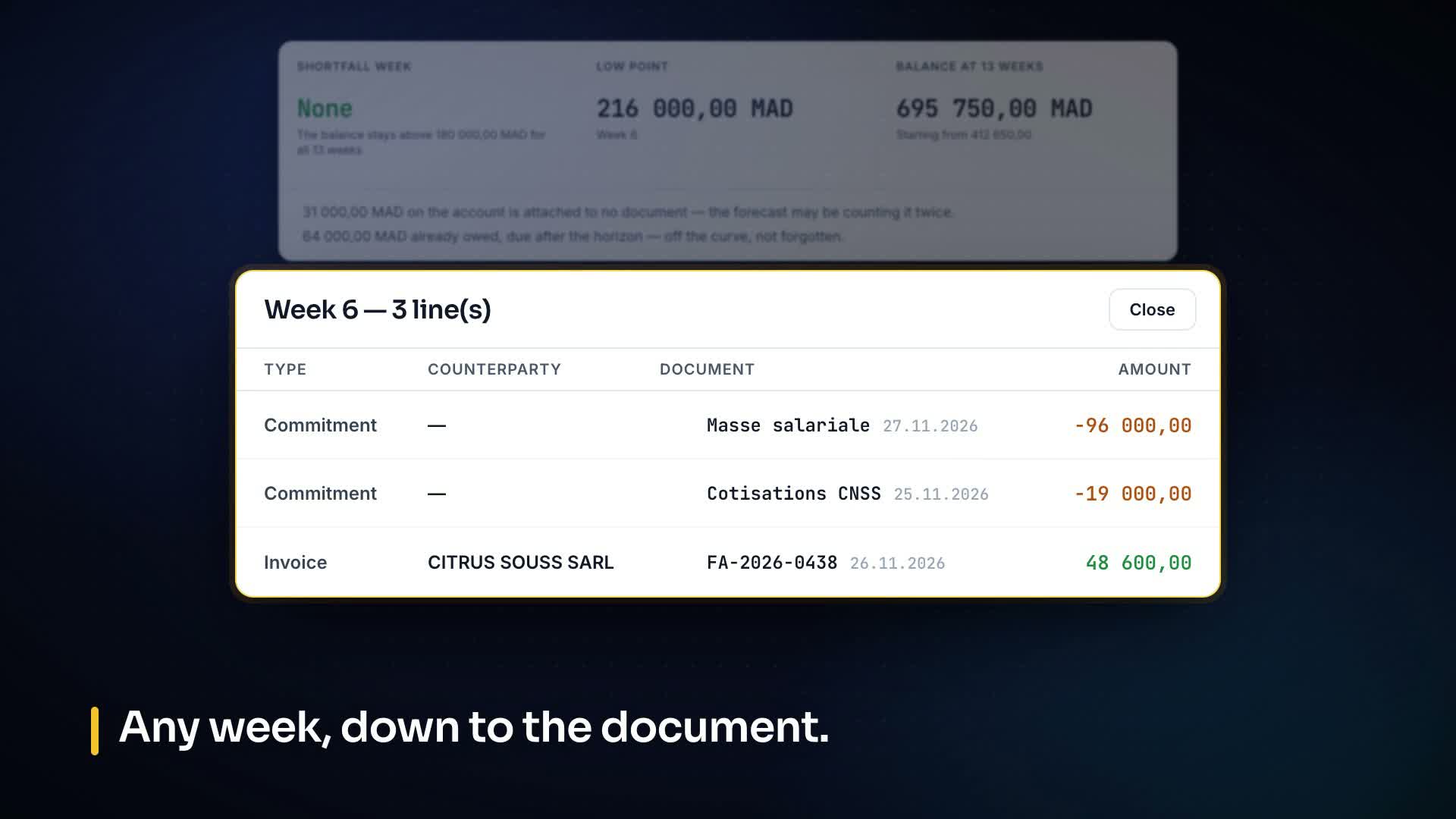 1:59Episode 28Which week will the cash run short, and can you see it a month and a half ahead?
Create the account, tick your modules, add the trucks — the first mission leaves today.