Damage without proof
The client claims for a damaged box. Nobody can say on which trip the damage appeared, nor who held it the week before.
When you haul containers, the client does not speak about missions: they speak about numbers. A damage dispute starts from a number, demurrage is counted on a number, and “where has this box been, and with whom” is a question a spreadsheet cannot answer. So a container is a register in its own right, not a line of text inside a cargo description.
The client claims for a damaged box. Nobody can say on which trip the damage appeared, nor who held it the week before.
The line charges detention because the box stayed three days too long. You find out on the invoice, never before.
One digit swapped and the terminal refuses the box. The typo was made in the office; it is paid for at the port.
Type and size (dry, reefer, open top, flat rack, tank, bulk; 20 or 40 feet, high cube), tare, maximum gross weight, next CSC examination date, brand and operator. The payload is derived by itself.
The detail that matters. Each box’s position is readable in the list: at the depot, or on a mission with its file number.
The ISO 6346 check digit is recomputed at every keystroke: if the number does not add up, the product announces the digit it expects. The typo is caught by the operator typing it, never by the port unloading it.
The detail that matters. The same code does the arithmetic in the browser and on the server — one single implementation of the standard, so the hint and the validation can never disagree.
Not every number in the world follows the standard, particularly boxes owned by the shipper. They are registered with an explicitly ticked box: the rule exists, and it has a door.
The detail that matters. The prefix suggests the operator (MSKU → Maersk) from the built-in BIC register, but never writes anything into your own brand directory: it proposes, you confirm.
Every mission the box travelled on, with the client, the seal number, the return date. That is the answer every damage discussion starts from, and it fits on one screen.
The detail that matters. History is assembled at read time from the actual movements: no copied column that could quietly drift away from the facts.
Seal, full or empty, cargo weight, end of free time: these are properties of the trip, not of the box. They change from one trip to the next and are recorded on the mission, next to the coupling.
The detail that matters. The container card only holds its technical passport. That is what gives the history meaning: the box did not “become” full, it was full on that particular file.
The order form and the invoice lines print the container numbers. The client finds in the document exactly the boxes that were discussed.
The detail that matters. Documents keep a snapshot of the number: correcting a card later does not modify paper already sent to the client.
| Container | Size | Type | Position | Trips |
|---|---|---|---|---|
| MSKU 123456-5 | 40′ HC | Reefer | on mission · M-0705 | 18 trips |
| TCLU 765432-0 | 40′ | Dry | at the depot | 24 trips |
| CMAU 209871-3 | 20′ | Dry | on mission · M-0704 | 11 trips |
| MSCU 641230-7 | — | — | expected check digit: 0 | being typed |
Renaming a box that has travelled would silently transfer its eighteen trips to another one. Before the first movement the number is a draft and freely correctable; after that, a mistake is fixed by archiving the card and creating the right one.
Cargo plus tare above the maximum gross: the product warns. It does not block — the weighbridge is at the terminal, and software that forbids what reality allows ends up being worked around.
An alert rule warns N days BEFORE free time ends. After it ends, that is no longer a warning, it is a demurrage invoice.
A box taken out of the fleet leaves the lists and the selectors but keeps its history readable: past missions do not lose their container.
A deliberate decision: for a container haulier, a TMS without a box registry is of no use. Selling it separately would mean charging twice for the right to use the product.
They are registered with the “non-ISO 6346 number” box ticked. They lose the check-digit validation — meaningless on a proprietary number — and keep everything else: history, position, documents.
Yes, search covers the whole registry: “where is MSKU 123456-5” is one query, not a call to the dispatcher. The number can be typed with or without spaces and dashes, the way people write it.
The product records the end of free time per trip and warns you before the date. Computing the amount stays with the shipping line: we do not invoice on their behalf, we make sure the date does not surprise you.
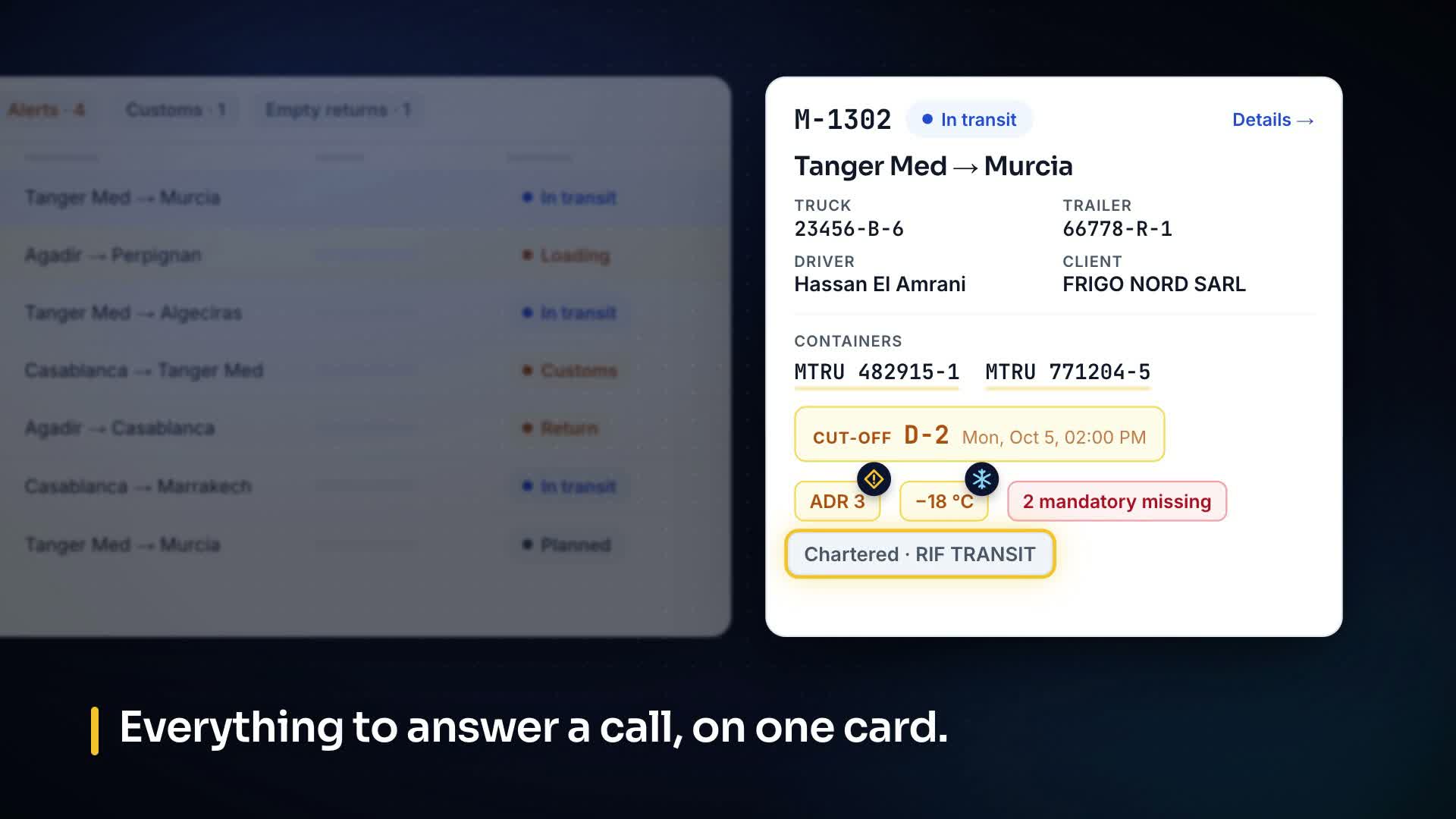 1:58Episode 4How do you follow everything that’s running without a whiteboard, notebook or group chat?
 1:50Episode 5What does a mission keep once it has left: who drove, when, at what cost?
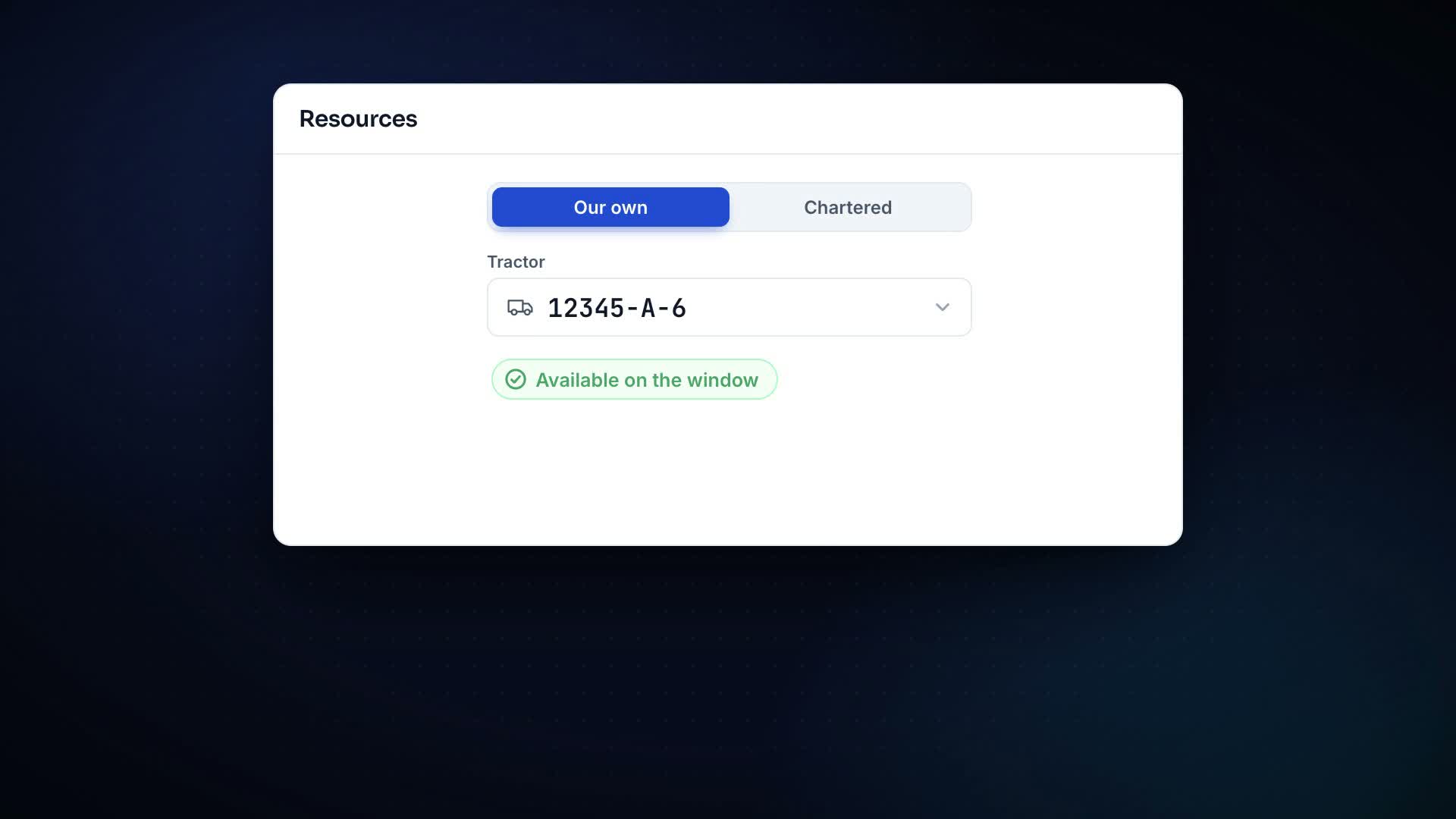 1:51Episode 6How do you create a mission on one page instead of six screens?
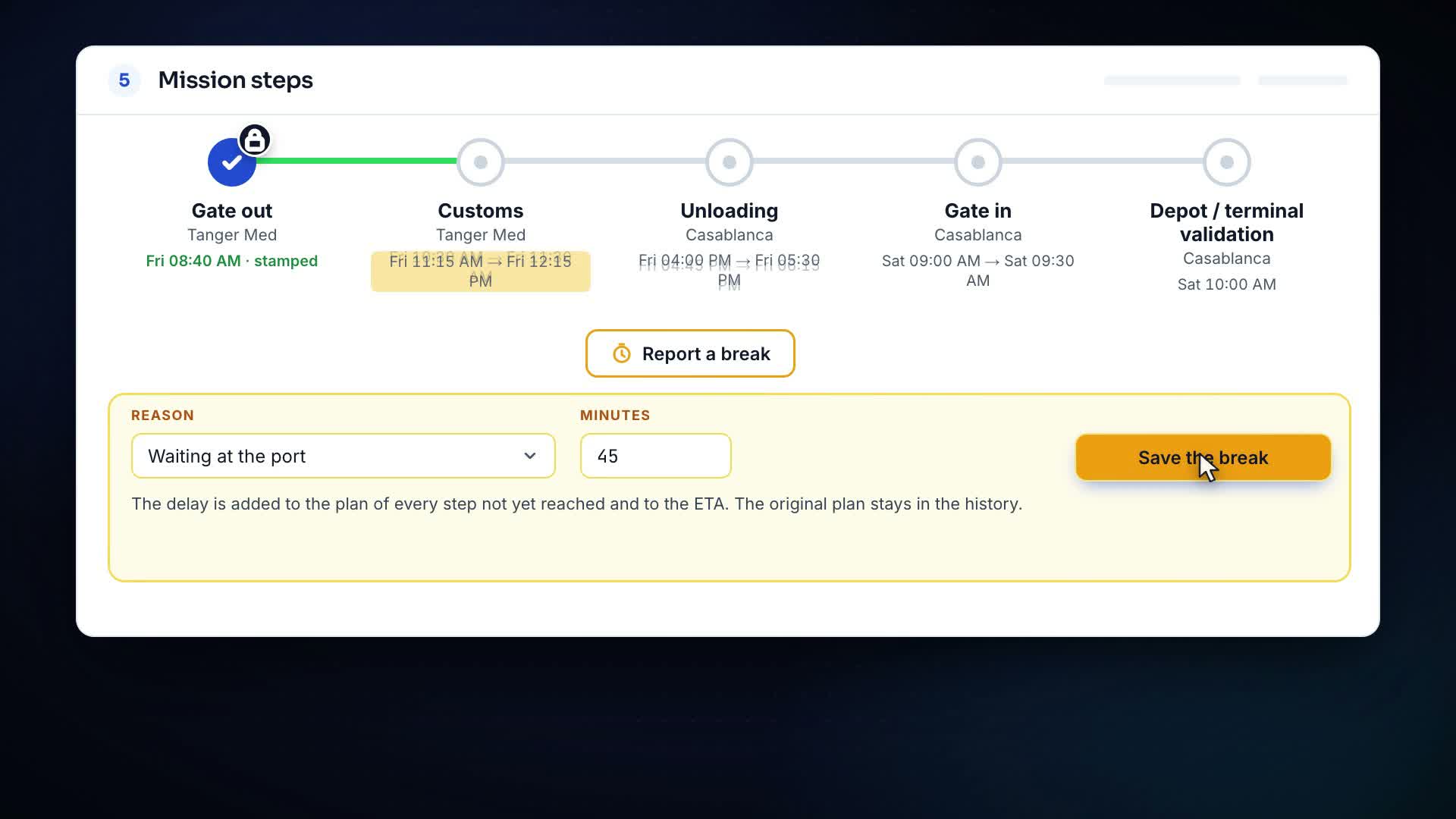 1:47Episode 7Where do customs, seals, steps and the money of a mission live?
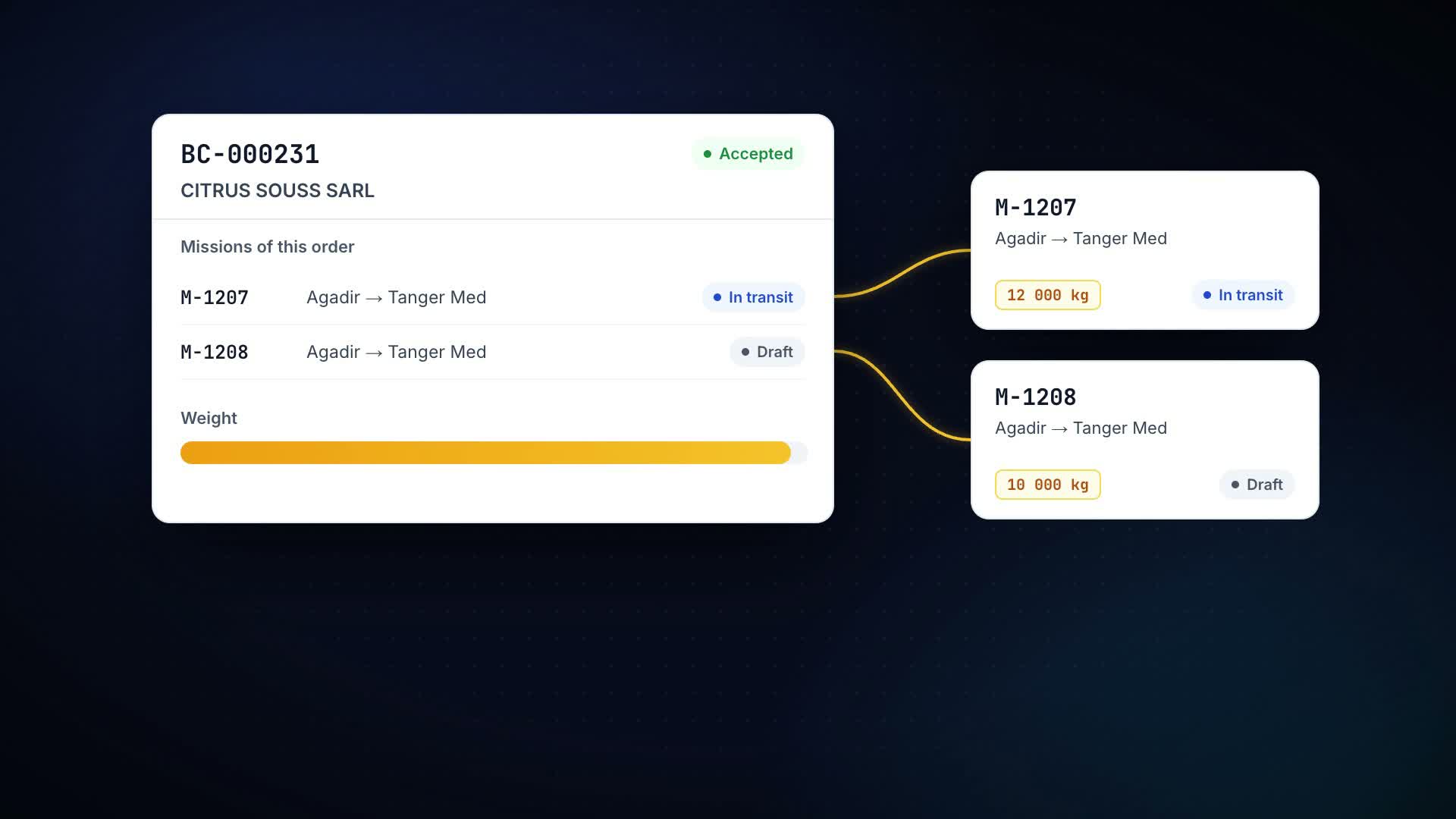 1:39Episode 8What happens when one order leaves on several missions?
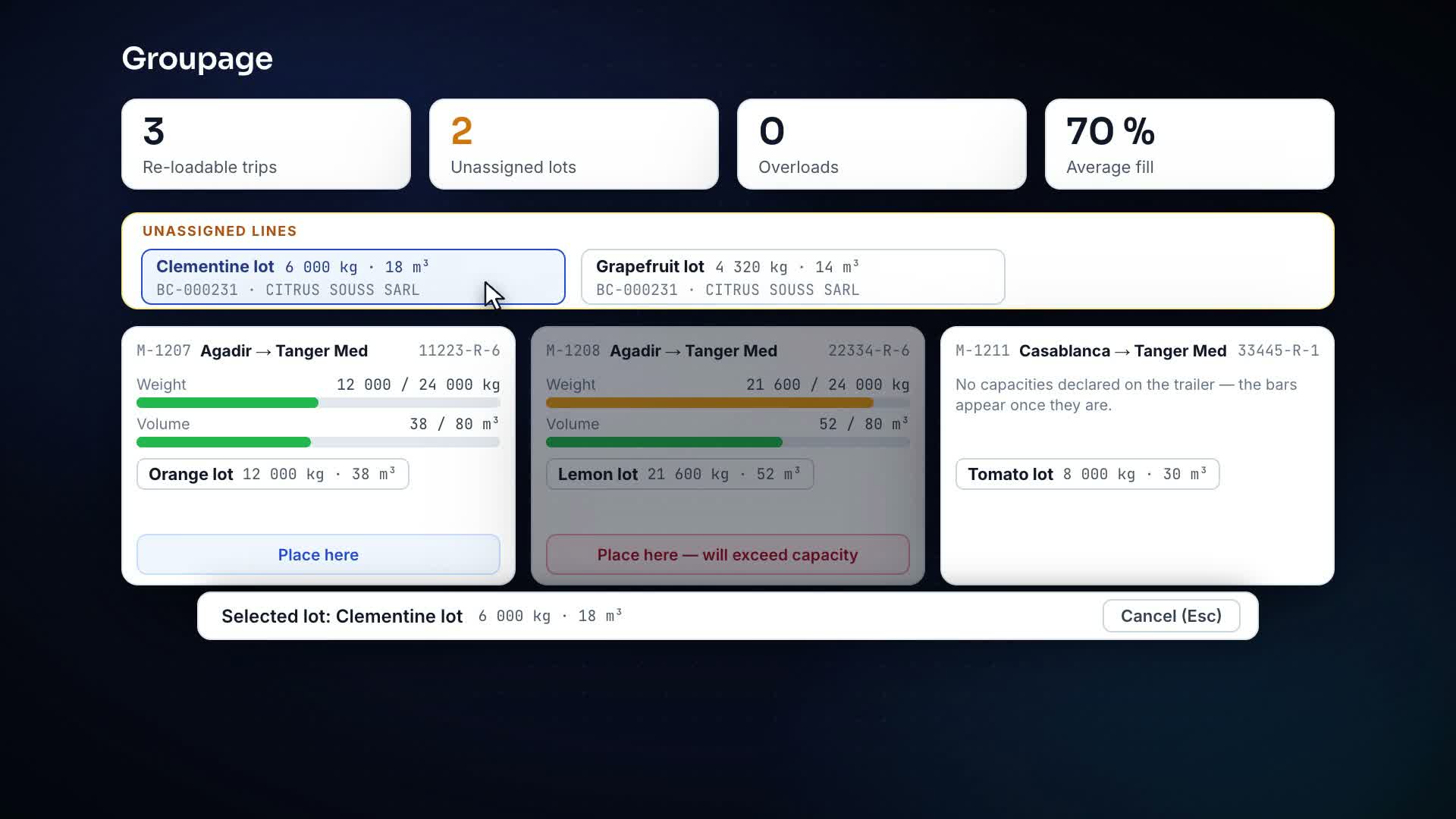 1:57Episode 10How do you spread an order’s freight across its missions without overloading?
Create the account, tick your modules, add the trucks — the first mission leaves today.